After 70 years of driving global evangelical strategy, the Church Growth Movement is facing a profound reckoning as Christian leaders question whether megachurch models and corporate management logic have compromised the core mission of disciple making.
The debate gained momentum following a podcast discussion between Todd Wilson, co-founder of the church-planting network Exponential, and leadership expert Pastor Carey Nieuwhof. Reflecting on research from his book How Did We Get Here?, Wilson argued that the systems spawned by the movement now face a crisis of diminishing returns and decline.
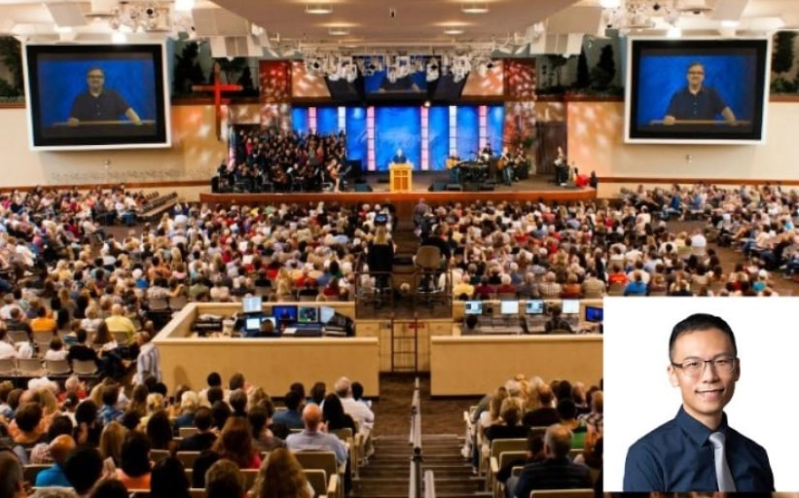
The conversation prompted a widely circulated response from the Rev. David Doong (董家驊), general secretary of the Chinese Coordination Centre of World Evangelization (CCCOWE). Writing on his blog, Doong analyzed the movement's lasting impact through the lens of Chinese-speaking churches, re-examining the tensions among megachurch structures, executive leadership styles, and true disciple multiplication.
Origins on the Mission Field
Although modern church growth strategies are often associated with North American megachurches, the movement originated on a 1950s mission field in India. Donald McGavran, widely considered the father of the modern Church Growth Movement, observed striking differences in growth rates between neighboring churches, leading him to investigate whether church multiplication followed observable and replicable principles.
Wilson highlighted an often-overlooked fact: although McGavran personally planted over a dozen churches during his lifetime, none grew beyond 100 members. His primary concern was never building massive local congregations, but ensuring that the Gospel multiplied and disciples were continually sent out.
In 1961, McGavran returned to the United States and established the Institute of Church Growth, relocating it to Fuller Theological Seminary in 1965. By bringing his missional principles into academia, McGavran enabled church growth concepts to spread rapidly across North American evangelicalism.
Corporate Logic Enters the Sanctuary
By the 1980s, the movement underwent a major shift as modern business management concepts—championed by management guru Peter Drucker—entered the ecclesiastical sphere.
Through businessman Bob Buford, who founded the Leadership Network in 1984 under Drucker's mentorship, corporate tools and governance frameworks were systematically introduced to churches. Drucker’s foundational questions—such as "Who is your customer?" and "What does the customer value?"—became central to strategic planning at prominent congregations like Willow Creek Community Church and Saddleback Church.
"The average person sitting in a church today rarely realizes the profound impact Peter Drucker had on their church," Wilson said during the podcast.
This corporate approach coincided with suburbanization, consumer culture, and the rise of broadcast media. Leaders like Robert Schuller, founder of the Crystal Cathedral, encouraged a generation of pastors to expand their vision. Schuller famously told a young Bill Hybels: "Give God a thimble, and He might fill it; give Him a 5-gallon bucket, and He might fill it; give Him a 55-gallon drum, and you might see something truly amazing happen."
Wilson acknowledged that this mindset created an inherent tension between trusting God in faith and simply seeking to maximize single-site congregation sizes.
The 'Purpose Driven' Acceleration
In the 1990s, Rick Warren's book The Purpose Driven Church became the practical operational manual for the movement, serving as its "acceleration engine." Wilson estimated that nearly half of modern North American megachurch founders consciously adopted Warren's framework.
However, practical implementation often strayed from original intent. While Warren designed his "baseball diamond" model to move believers toward spiritual maturity, many churches focused primarily on attracting crowds.
"It was a safe way to reach more people," Wilson noted. "However, we began catering to people's felt needs rather than their real needs."
Postmodern Critiques and Missional Alternatives
By the late 1990s and early 2000s, younger leaders began questioning whether the attractional model over-relied on consumerism and corporate efficiency at the expense of spiritual depth.
Interestingly, the "Emerging Church Movement" traces its roots back to the Leadership Network itself. In 1995, the organization gathered Gen X leaders—including Mark Driscoll, Brian McLaren, and Dan Kimball—to address megachurch succession. Instead of replicating seeker-sensitive strategies, these young leaders began asking: "What does it actually look like to build a missional church in a postmodern culture?"
While that cohort eventually fractured into distinct camps—some focusing on church planting and others leaning into theological deconstruction—a parallel "Missional Church Movement," inspired by theologian Lesslie Newbigin, gained traction by emphasizing that the church is a community sent into the world rather than an event venue.
Reflecting on those early missional writers, Wilson admitted that their critiques were ahead of their time. "If many of the books they wrote back then were published today, they would likely be bestsellers. They were actually 20 years ahead of their time," he said.
Doong noted in his response that these critiques were not external attacks, but internal regulatory mechanisms within the Church Growth Movement itself.
The Cost of Executive Pastors and Celebrity Culture
Both Wilson and Nieuwhof addressed the structural risks of scaling churches into multi-campus enterprises. When an organization spans multiple sites and thousands of attendees, pastors often function as CEOs rather than shepherding pastors, creating governance structures that lack personal accountability.
Nieuwhof noted that no leader is immune to situations where a leader's public platform outpaces their character, contributing to high-profile megachurch scandals in recent years.
Commenting on this trend, Doong emphasized that organizational management must remain a servant to the Gospel rather than driving church identity. "While falling into sin is not unique to celebrity leaders, when leaders are elevated to celebrity status, the temptations and risks of falling undeniably increase," Doong wrote.
Shifting From 'Seating Capacity' to 'Sending Capacity'
Looking to the future, Wilson argued that the church must overhaul its core operational metrics rather than relying on superficial updates.
"We have an operating system that, if people really look at it closely, is an expiring, outdated operating system," Wilson stated.
Both Wilson and Doong emphasized that success must no longer be measured by Sunday attendance, but by how many disciples are sent out and how many new communities are planted. Doong summarized this vision as "a fundamental shift from seating capacity to sending capacity."
Addressing the shift toward younger leadership, Nieuwhof recalled advice given to older generations: "You can choose to fight them, or you can choose to fund them."
Concluding his reflections, Doong urged church leaders to rediscover McGavran’s original vision centered on "the healthy growth of the collective Church and the multiplication of disciples."
"Faced with the shifts and challenges of our current era, the Church’s hope lies first in 'God's work,' and second in making good use of the 'diverse gifts' God has granted to the Church," Doong wrote. "Through dialogue and exchange, mutual learning and collaboration, we can embrace diverse missional approaches to witness the good news of the Kingdom of God."