Christian leaders meeting in Hong Kong urged urban congregations across Asia to move beyond merely existing within their cities to actively transforming them through holistic ministry and unity.
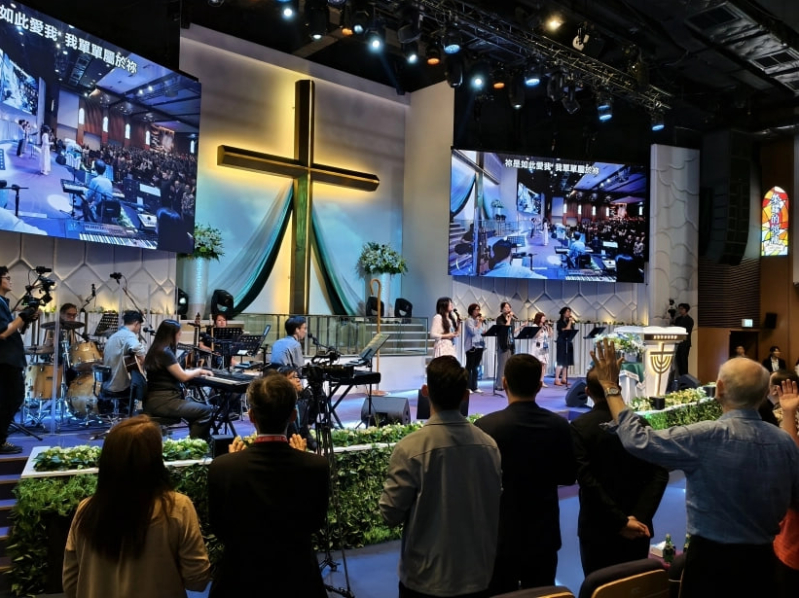
Speaking during the "2026 Asia Division Conference (HK)" held June 16 to 18 at the Yuen Long Kam Kwong Church Worship Centre, church leaders from Hong Kong and the Philippines outlined a paradigm shift for urban missions. The gathering was jointly organized by international bodies including Church Growth International and the Asia Christian Leaders Summit.
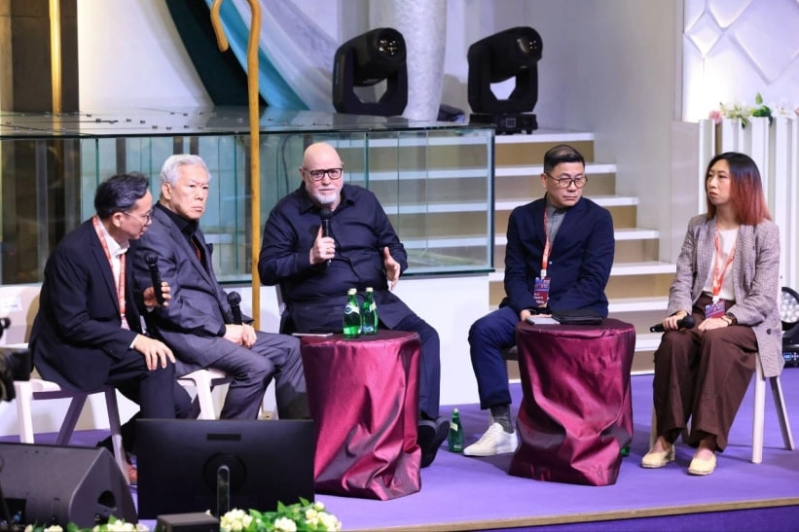
Focusing on the theme "A Church for the City" during the June 17 morning plenary, the Rev. Edmound Teo (張聯強) and Dr. Hugo Chan (陳世強) from Hong Kong joined the Rev. David E. Sumrall from the Philippines to address pressing challenges and opportunities facing Asian metropolises.
Moving From 'IN the City' to 'FOR the City'
Addressing the relationship between congregations and their broader urban environment, Teo, who has ministered in Hong Kong for 29 years, categorized local churches into two primary groups: international or English-speaking congregations that came "TO the city," and Chinese-speaking fellowships that are "IN the city."
Teo challenged international fellowships to integrate deeper into local society and operate as churches "in" the city rather than representing only their home nations.
"They may hail from the Philippines, Africa, or Indonesia, but while they are here, they are part of Hong Kong," Teo said.
However, Teo emphasized that merely residing in a city is not the ultimate goal. Every congregation must transition into becoming a church "FOR the City."
"This is not simply about speaking in tongues or being filled with the Holy Spirit; God is leading the church into a deeper step," Teo said.
To operationalize this vision, Teo presented a "4M Strategy" targeting key pillars of urban society:
-
Marriage: Strengthening families through targeted marital counseling and support.
-
Marketplace: Engaging daily workplaces as primary spheres of Kingdom ministry.
-
Manner: Cultivating a lifestyle of consistent public benevolence and good deeds.
-
Miraculous: Praying for supernatural healing, signs, and divine intervention.
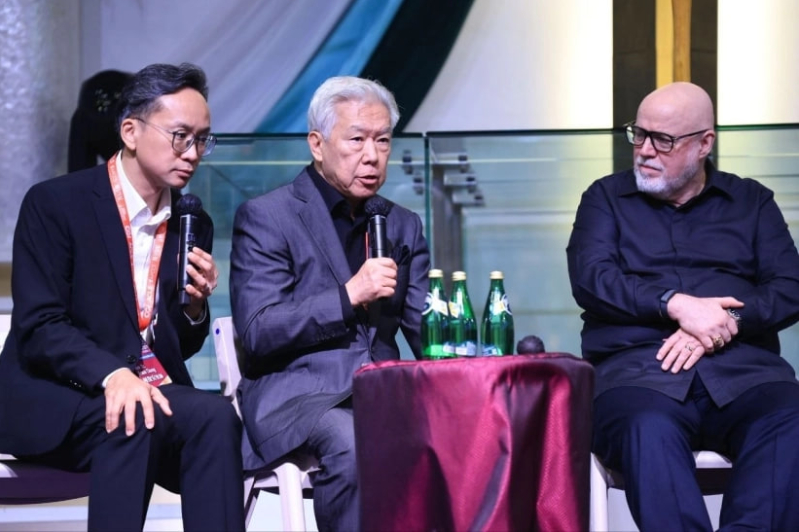
During the forum, Dr. Hugo Chan (center) noted that Hong Kong's role is transforming from "a corridor for the world to enter China" to "a bridge for China to reach the world." | Provided by Event Organizers
Hong Kong's Strategic Role and Spiritual Season
Chan, a Hong Kong resident for 71 years, highlighted the city's historic and evolving significance within global mission strategy.
"China holds an extremely vital position in the end times, and Hong Kong is its strategic hub," Chan said. "For forty years, we have personally witnessed Hong Kong serving as China's gateway to the world, allowing people of all nations to enter China."
Chan noted that Hong Kong's functional role is undergoing a profound shift from a corridor through which "the world enters China" to a strategic bridge by which "China reaches the world."
Reflecting on social and economic adjustments over recent decades, Chan expressed conviction that God's providence lies behind the shaking.
"Because God deeply loves Hong Kong, He allowed this city to be shaken," Chan said. "Many of the challenges over the past two decades were permitted to rebuild a firmer foundation. We must remain sensitive to the current spiritual season and earnestly seek Hong Kong’s redemptive value and destiny."
Teo affirmed this confidence, observing that while the era between the 1997 handover and 2019 represented a specific historical chapter, Hong Kong has entered a brand-new season.
"Spiritually, I see an open heaven over us—an open expanse above our heads," Teo said. "At the same time, God is preparing a generation of overcoming Christians and overcoming churches. A fresh anointing is being poured out upon our city."
Pastoral Unity and Reaching the Grassroots
Turning to spiritual authority, Chan underscored that church unity is a prerequisite for urban transformation. He noted that authority over a city requires church leaders, elders, and pastors to stand together as one family.
"When a husband and wife are united, they have authority over their family; when church leaders, elders, and pastors are of one heart, they have authority over the church," Chan said. "But if every leader in Hong Kong operates in isolation, the Church loses its authority over the city."
Offering insights from the Philippines, Sumrall reflected on changes since his arrival in Manila in the early 1980s. He warned against Western commercial influences that reduce worship to a consumer transaction.
"It grieves my heart," he remarked, "because that simple faith of loving Jesus has changed significantly."
In response, Sumrall's ministry is directing resources away from capital-centric megachurches toward rural provinces that house 80% of the Philippine population. He noted that rural pastors frequently lack formal theological training and require systematic biblical grounding. To build genuine trust with provincial leaders, Sumrall stressed clear communication.
"First, you must let local pastors know that you are not from a Manila megachurch trying to poach their members," Sumrall said. "We are here to help churches grow, not to steal people."
Regarding day-to-day engagement in the city, Sumrall cited the parable of the wheat and the tares.
"In the parable of the wheat and the tares, Satan scatters his seeds, and God scatters His," Sumrall said. "If we want to reach a city, we must teach our members that wherever God has placed them—your apartment complex, your neighborhood, your office, your workplace—you are a Gospel seed planted by God, and He expects you to bear fruit."
Sumrall concluded with a plea for spiritual reality over emotional hype.
"I deeply feel that we need a mighty outpouring of the Holy Spirit to wash away all pretense and superficiality, bringing us back to reality—not hyped-up emotions, but a genuine encounter with the living God," Sumrall said. "I don't care what people look like when they are on their knees; I care about whether their lives are different after they stand up. Have they truly been transformed? That is what I continue to pray for."
Summarizing the task ahead, Chan established three guiding principles for churches pursuing urban mission.
"First, the Church must possess a Kingdom mindset; second, a Kingdom perspective and scale; and third, a global vision—reaching the entire world with the Gospel through Hong Kong!" Chan said.