European and Israeli researchers have launched a $2.7 million study using artificial intelligence and chemical analysis to uncover where the Dead Sea Scrolls were written.
Widely recognized as one of the most significant archaeological discoveries of the 20th century, the Dead Sea Scrolls contain the oldest known Hebrew manuscripts of the Bible. Yet for more than seven decades, the precise locations where these ancient documents were copied and crafted have remained an unsolved mystery among scholars.
The five-year initiative, titled "Tracing Scribes and Scrolls," brings together historians, archaeologists, material scientists, chemists, and AI specialists. The team aims to reconstruct the historical and geographical context of the scrolls, offering fresh perspectives on early Judaism and Christianity.
Uncovering the True Origins of the Scrolls
For decades, scholars have debated the origins of the Dead Sea Scrolls: Were these texts written by a secluded Jewish community living in Qumran? Were they rushed out of Jerusalem and other regions of Judea to hide in caves during times of crisis? Or did the caves serve as a library or an ancient genizah—a repository for sacred texts?
To answer these core questions, Mladen Popović, a professor at the University of Groningen in the Netherlands, is leading the team backed by a 2.5 million euro ($2.7 million) Advanced Grant from the European Research Council.
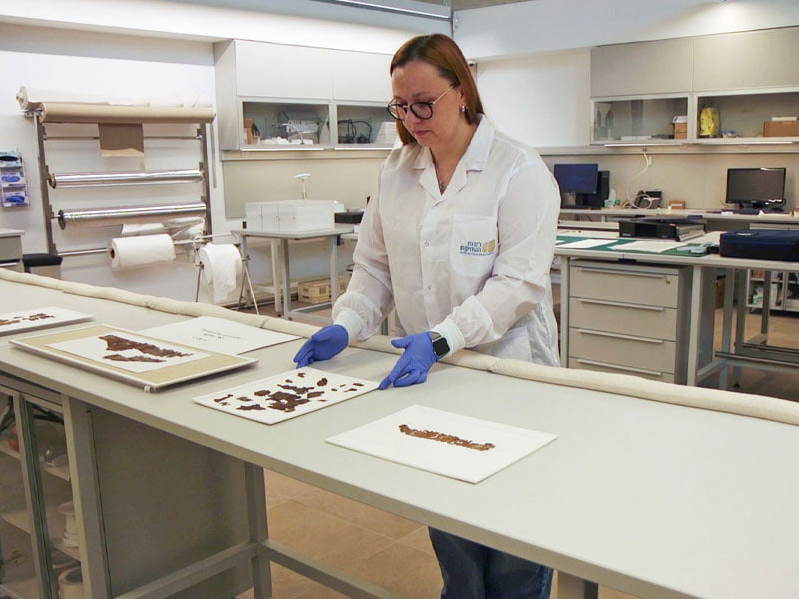
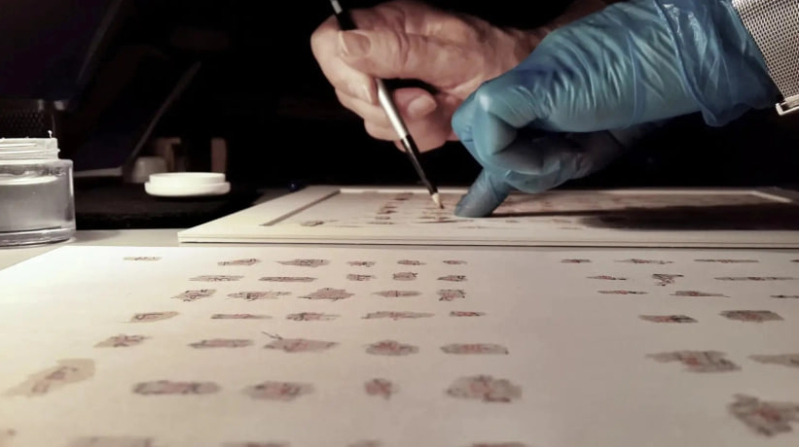
Working closely with the Israel Antiquities Authority (IAA), the project will examine approximately 250 scroll samples under the IAA's care, including parchment, papyrus, and ink. Crucially, the research team will, for the first time, directly compare papyrus samples from Egypt with those discovered at Qumran and other sites across the Judean Desert.
By analyzing the chemical signatures of these materials, researchers hope to identify the physical "fingerprints" of the scrolls, uncovering the origins of raw materials and manufacturing techniques. Advanced AI tools will process the chemical data to detect complex patterns that evade traditional analysis.
These results will then be integrated with paleography, codicology—the study of a scroll's physical structure, including sheet preparation, layout, margins, and stitching—and linguistic and literary evidence.
'An Extraordinary Window' Into Ancient Judea
"This is the largest project to date applying artificial intelligence to explore the cultural context of the Dead Sea Scrolls," said Popović, the project's principal investigator. "These manuscripts offer an extraordinary window into the rich intellectual world of ancient Judea. By combining state-of-the-art laboratory analysis and ancient handwriting research with the dramatic advances in AI over recent years, we can now address questions that were previously out of reach—not only who copied these texts, but where they were produced, how knowledge circulated, and what role these texts played in society at the time."
Dr. Ilit Cohen-Ofri, a key research partner from the Israel Antiquities Authority, emphasized the value of the international collaboration.
"This research will establish an unprecedented chemical database of the Dead Sea Scrolls," Cohen-Ofri said. "In recent years, we have realized the wealth of information that can be extracted directly from materials such as parchment, papyrus, and ink, unlocking secrets hidden within these manuscript fragments preserved for over two millennia. Participating in an international project of this scale allows the Israel Antiquities Authority to contribute its expertise in artifact material analysis, benefiting both academia and the broader public."
The international initiative also gathers scholars from Italy and Denmark, partnering with the Egyptian Museums in Berlin and Turin, as well as KU Leuven in Belgium.
As the project unfolds, piecing together the historical puzzle formed by more than 25,000 scroll fragments promises major breakthroughs in understanding how Biblical texts were transmitted and how early faith communities took shape.