In Europe, publicly declaring oneself a believer in Jesus is increasingly becoming something that "requires an explanation."
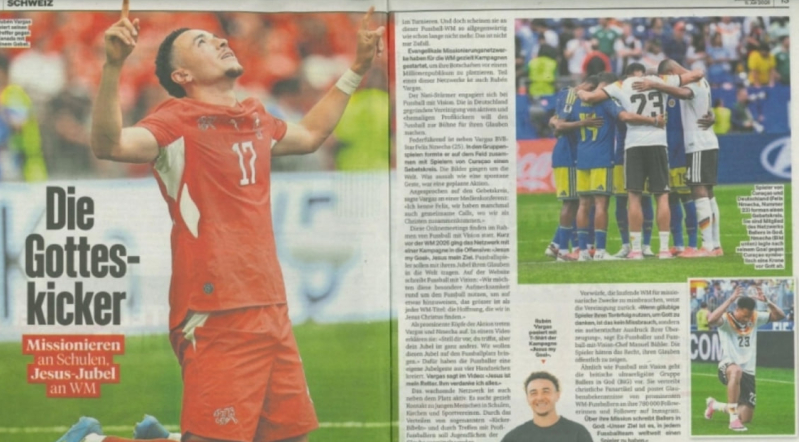
Media outlets like Switzerland’s SonntagsBlick and Germany’s mainstream public broadcasters ARD and ZDF have run extensive coverage with a heavily guarded and suspicious tone regarding what are essentially personal acts of faith. These include German footballer Felix Nmecha leading his teammates in prayer after a match, and Swiss international Rubén Vargas attending church services on Sundays.
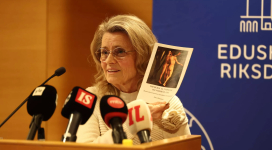
Florian Wüthrich, a veteran journalist and CEO of the Swiss Christian media company Livenet, noted in a recent commentary that Christians are facing a climate of "generalized suspicion" within today’s highly secularized European society. Wüthrich directly called out the trend, stating, "This isn't journalism—it’s prejudice."
The Media's 'Framing Effect'
Wüthrich points to the "framing effect" as a primary tactic used by mainstream media. Framing involves using deliberate wording and narrative structures to create a negative impression of a person or topic without explicitly lying.
For instance, SonntagsBlick’s coverage of Rubén Vargas, who openly shares his Christian faith, reveals this underlying bias. Although the Swiss international has never made any controversial statements regarding LGBTQ issues or homosexuality, the report subtly associated him with homophobia. The article noted: "In Zurich, he attends sermons at the ICF (International Christian Fellowship). Critics accuse this free church of having cult-like traits and homophobic tendencies, allegations that the ICF denies."
Similarly, a documentary by Germany’s ZDF applied the same treatment to the Christian rap duo O'Bros. Because the group once shared a stage with American pastor Bill Johnson—who has faced criticism for past homophobic remarks—ZDF's reporting implied that O'Bros harbored the same prejudices.
"This kind of logic simply doesn’t hold up," Wüthrich said.
Stigmatization Through Association and Innuendo
Wüthrich observes that highly secular societies, such as Switzerland and Germany, have become hyper-sensitive to public displays of religious faith.
In a democratic society, every individual has the right to publicly express their convictions—whether political, lifestyle-oriented, or religious. Yet, when a football player scores a goal and points to the heavens to give glory to God, the media’s knee-jerk reaction is to question whether there is an organized group or a political agenda behind the gesture.
He pointed out the irony that while many other countries view a public figure's expression of faith as completely ordinary, it is Europe—a continent that prides itself on "freedom" and "tolerance"—that grows most anxious over public displays of Christianity. This paradox, he suggests, warrants deep reflection.
Wüthrich clarified that he is not defending all Christian organizations unconditionally. He admitted that certain groups do seek political influence under the guise of faith, and such phenomena absolutely deserve rigorous journalistic scrutiny. However, he emphasized that criticism must be grounded in facts, not built on "association" and "innuendo." Painting a churchgoing athlete as a member of a dangerous network is not reporting; it is stigmatization.
'Always Be Prepared to Give an Answer'
Despite the media pressure, Wüthrich does not advise athletes to keep a low profile. Instead, he encourages them to remain authentic. Citing the parable of the leaven in Matthew 13, he reminded them that even a small force can have a massive impact. He further invoked Zechariah 4:6—"Not by might nor by power, but by my Spirit, says the Lord"—to inspire them to continue relying on God.
He closed by pointing to the biblical exhortation in 1 Peter 3:15: "But in your hearts revere Christ as Lord. Always be prepared to give an answer to everyone who asks you to give the reason for the hope that you have. But do this with gentleness and respect."
(Editor's Note: This article is compiled and translated based on a German commentary published by Florian Wüthrich on the Swiss media outlet Livenet.)