Since 2008, World Sleep Day (WSD), an annual event held in March, has arrived as scheduled. Organized by the World Sleep Society, this global initiative aims to raise public awareness about the importance of sleep health. The Society's website details the significance of sleep and the various impacts of sleep deprivation, launching global campaigns to urge the public to address sleep issues.
In today's fast-paced, high-pressure modern society, sleep problems have become a common concern for most people. Studies consistently show that anxiety, stress, and the pervasive use of electronic devices continue to affect sleep quality. Concurrently, society widely regards sleep as a "vital resource" and views insomnia as a "waste of resources," leading to the proliferation of various sleep management solutions and devices. Sleep has transformed into both a challenge and a burgeoning industry.
Sleep as Part of Created Humanity
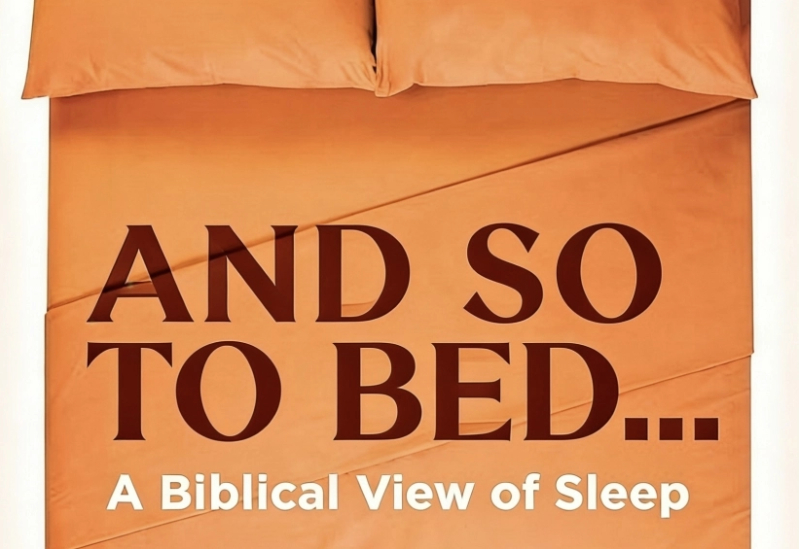
However, Adrian Reynolds, who is responsible for leadership development at the Fellowship of Independent Evangelical Churches (FIEC) in the UK, suggests that the Bible's understanding of sleep differs significantly from modern societal views. In his 2014 book, And So To Bed, Reynolds explores biblical perspectives on sleep, offering a different path for contemporary thought.
Reynolds notes that the Gospel of Matthew records Jesus sleeping during a storm.
As fully human, Jesus' depiction of sleep in the Gospels carries a crucial message: sleep is an intrinsic part of our created humanity. He also cites the Gospel of John's account of Jesus' weariness, asserting that "feeling tired and needing rest are normal." He writes, "Sleep should not be denied or devalued."
Sleep as a Spiritual Gift
Reynolds further posits that while sleep is a physiological necessity, this fact should not overshadow another truth: sleep is also a gift. He interprets David's Psalm 23, "The Lord is my shepherd; I shall not want. He makes me lie down in green pastures; he leads me beside still waters," understanding "lie down" as sleep. He highlights that David places "rest and sleep" alongside "green pastures and still waters," viewing both as gifts from God.
He also references Solomon's blessing to his children in Proverbs: "When you lie down, you will not be afraid; when you lie down, your sleep will be sweet" (Proverbs 3:24).
Reynolds emphasizes, "In the appropriate context, the Bible's attitude towards sleep is positive. Sleep is not merely a bodily function but a beautiful gift from the Heavenly Father, to be cherished."
Daily Sleep Practice as an Act of Trust
Reynolds also uses specific, crisis-laden sleep scenarios to illustrate how sleep can be an expression of trust. For instance, David, while fleeing from his son Absalom, wrote: "I will both lie down in peace, and sleep; For You alone, O Lord, make me dwell in safety" (Psalm 4:8). Jesus, during a storm, was "asleep on a cushion" (Mark 4:38).
After explaining these scriptures, Reynolds concludes: "Sleep always means that we believe 'everything will be safe and sound,' because 'He who keeps you will not slumber!'"
Beware of Sleep Becoming an Idol
After discussing the value of sleep, Reynolds, as a biblical scholar, introduces a point that sleep experts might not emphasize: sleep can become an idol. His "avoid idolatry" principle states that while sleep is a gift from God, it should not usurp God's place. "Sleep, like all good gifts from God, can easily become an idol. We may excessively love and desire sleep, to the extent that the gift itself replaces the Giver."
He also refers to Jesus' prayer in the Garden of Gethsemane before His arrest, pointing out that if sleep occurs at a time when one should be vigilant, it is not "enjoying a gift" but a "dereliction of duty." He further cites Proverbs 20:13, warning, "Do not love sleep, lest you come to poverty; Open your eyes, and you will be satisfied," reminding that excessive sleep can lead to laziness.
Self-Checklist for Insomnia
Beyond biblical interpretation, Reynolds also offers practical advice. He states, "Your struggle with sleep may well have medical reasons, such as complex mental health issues. However, there are still spiritual dimensions that need to be addressed. I am not suggesting that every item on this list applies to you, but I still encourage you to read on."
And So To Bed also provides readers with several recommendations:
1.Pray to God for sleep: Since sleep is a gift, one should ask the Giver in faith.
2.Examine anxiety and worry: Insomnia is often accompanied by anxiety and worry, which are frequently issues of faith.
3.Learn contentment and trust: If sleeplessness stems from a desire for "more," one should understand that "contentment" is a virtue Christians ought to possess.
4.Address idols and problems: Resolving practical issues that disturb sleep and "constantly examining one's heart" can help improve sleep.